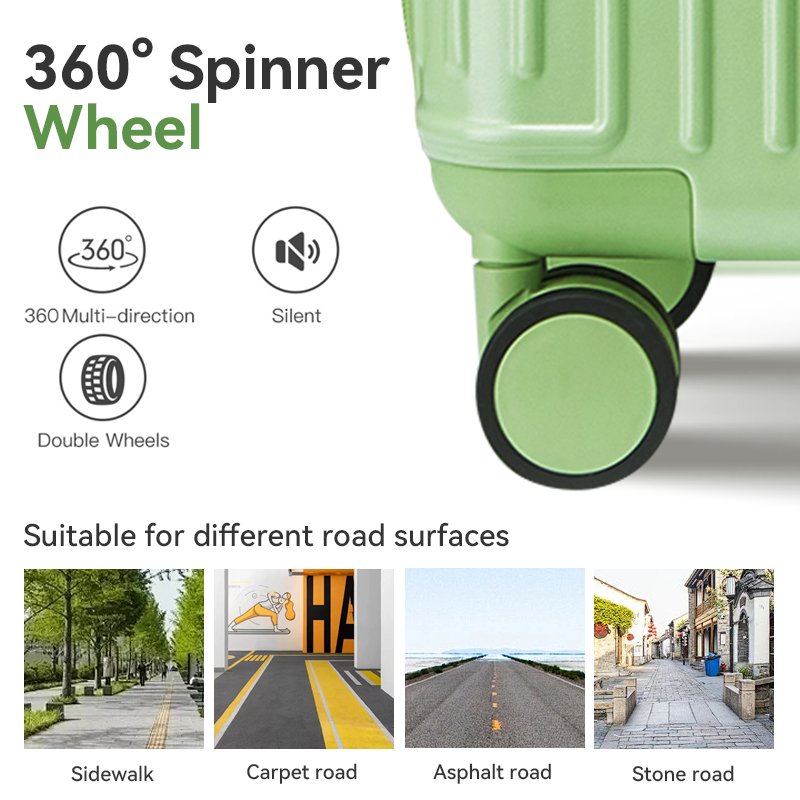
A luggage wheel enquiry should identify the complete assembly and the exact case version it belongs to before discussing price or quantity. A similar colour or wheel shape does not establish interchangeability. Xingan Luggage’s model 6606 page includes wheel information and an official component image. Use those as references when asking the supplier to identify the offered assembly, explain what is included in it and confirm whether matching spare parts can be quoted for the selected case versions.
Start with the case, then identify the component
Provide the luggage model, nominal size, purchase reference if available and clear photographs of the relevant component. Ask the supplier whether different sizes or production revisions use different wheel assemblies. Do not assume that all cases sold under one model number use an identical part. A multi-size set may require a component map rather than one general wheel description. The supplier should connect its proposed part reference to the case version being discussed, leaving any uncertain relationship visible for further confirmation.
Describe the scope of the requested item. A wheel, a wheel pair, a housing or a complete assembly may refer to different supplied units. Ask the supplier to list the included components and identify any separately quoted items. If associated fixing items are needed, request their inclusion status rather than assuming they come with the assembly. This is a purchasing definition, not an instruction to alter the case. Any service procedure should come from the responsible supplier or an appropriately qualified service provider for the identified product.
Use drawings and position references
Ask for the supplier’s component drawing or identification sheet, including the dimensions and interfaces relevant to its version-matching process. The purpose is to compare documented part identities, not to create a fit guarantee from a single visible measurement. If the assembly differs by position, request a position map referenced to a labelled case view. Terms such as left and right need a shared viewing direction. A simple supplier-annotated diagram can prevent two teams from using the same word for opposite positions.
Keep colour and appearance as separate fields. A matching-colour housing may be relevant to your retail presentation, but it does not prove the mounting interface or internal construction matches the original version. Conversely, a supplier may propose a visually different revision that requires separate review. Ask which details changed and which case versions the supplier identifies as suitable for that revision. Do not infer compatibility from the official gallery image, a part’s approximate size or the fact that both products are described as spinner wheels.
A wheel-assembly identification table
Enquiry field | Buyer reference | Supplier confirmation to obtain
Case version | Model, size and order reference | Exact luggage versions linked to the part
Component scope | Wheel or complete assembly request | Included components and supplied unit
Part identity | Photographs and existing reference | Supplier part code and revision
Position | Labelled case view | Position-specific part mapping, if any
Interface record | Request a matching identification sheet | Relevant drawing and version differences
Supply proposal | Requested spare quantity and packing | Availability, terms and packing identity
Send the same identification table when comparing a case purchase with a proposed spare-parts offer. For an importer distributing luggage through several retail markets, consistent part references make the purchase file easier to interpret even when customer-facing language differs. Ask how the supplier proposes to label spare assemblies so they remain connected to the correct case model and revision. Do not treat a bulk box of visually similar parts as a documented match for every case size in an assortment.
Separate service supply from performance claims
The official wheel image contains promotional language about movement and noise. A buyer who needs a performance statement should request the relevant evidence for the exact assembly and case version, including the conditions and limits of any result. The image itself does not establish a noise rating, load capability, service life or performance on every surface. Keep such evidence requests separate from the basic identification task. This allows the supplier to answer what part is offered before discussing which claims it can substantiate.
Before ordering spare assemblies, request a sample or other version-confirmation proposal from the supplier and record any unresolved differences. Ask whether future changes to the case or wheel would alter the part reference, and how those changes would be communicated. Confirm quantity units, packing, pricing and timing for the identified assembly. Do not assume spare parts are stocked or supplied simply because a wheel is pictured on a luggage page. For repeat purchases, refer to the accepted part code and revision rather than reusing an unlabelled photograph.
FAQ
Does a similar wheel photograph prove interchangeability?
No. Visual similarity is a starting reference, not a documented version match. Ask the supplier to connect the proposed assembly code and drawing to the exact luggage model, size and revision. Keep any uncertain relationship unresolved until the responsible party confirms it.
Should the enquiry ask for a wheel or an assembly?
State what you need, then ask the supplier to define its supplied unit. Request a list of included components and any separate items. That avoids comparing an offer for a wheel alone with an offer for a larger component assembly.
Can one part reference cover every case in a set?
Do not assume that it does. Ask whether the different case sizes and positions use the same assembly. If they differ, request a component map identifying the correct part reference for each relevant case version and location.
Does the website confirm spare-part availability?
A component image does not confirm stock or a spare-parts offer. Send the case and part references, estimated quantities and destination, then ask for current availability, packing and commercial terms for that specific assembly. Keep any proposed replacement revision clearly identified.
Product reference and enquiries
Product reference: https://xinganluggagefactory.com/product/6606/
Catalogue source: https://xinganluggagefactory.com/
Contact Xingan Luggage: https://xinganluggagefactory.com/contact/
More buyer articles: https://xinganluggagefactory.com/blog/