
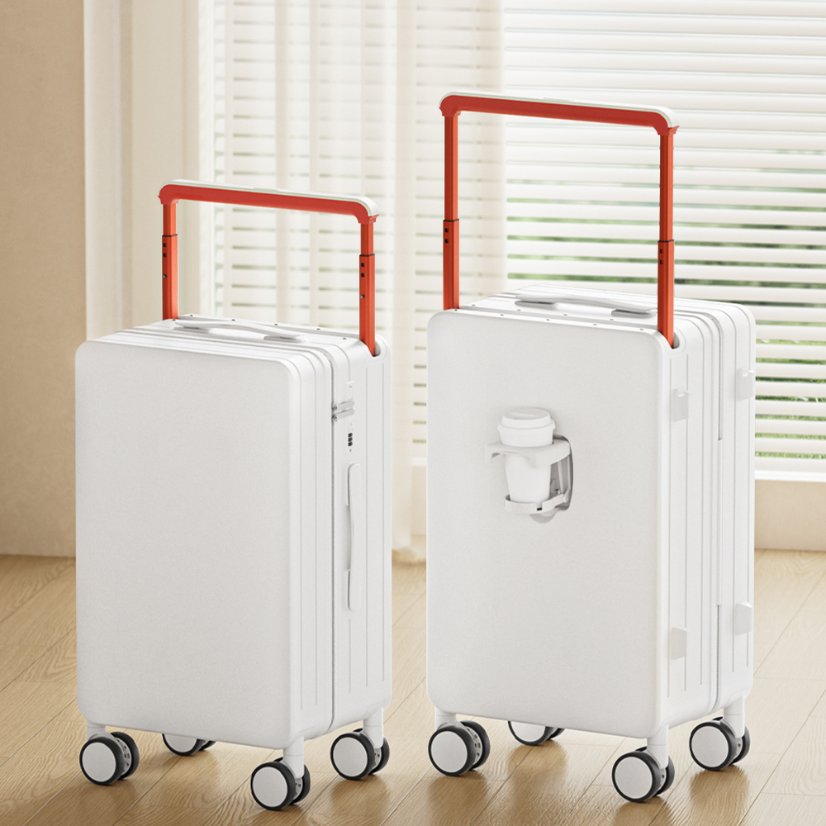
For a carry-on luggage enquiry, request the measured outside envelope of the exact case version, including the protruding components you specify in the measurement method. A nominal inch label is insufficient for that comparison. Xingan Luggage’s model 2026 page lists nominal size options and several exterior fittings. Use the page as a reference, then ask the supplier to provide a dimensioned drawing showing the complete case and the state of handles, holders and other fittings when each measurement is taken.
Separate the size label from the measured object
Begin by identifying which version the quotation covers. A model number may be offered in several nominal sizes, colours or component configurations. Ask the supplier to repeat the selected version on its drawing and quotation. Then separate shell dimensions from overall external dimensions. If both are useful to your buying team, request separate fields with clear names. A number labelled height can otherwise describe the shell, the case standing on its wheels or the case with an extended handle, making two apparently similar offers difficult to compare.
Write the units beside every requested dimension and define the orientation of the case. An annotated front, side and top view is often clearer than three unlabelled numbers in a message. Ask the supplier to show where each measurement begins and ends. For an importer comparing offers for UK, European or US retail channels, this approach keeps the product specification consistent even if local retail size labels differ. It also leaves any airline-specific acceptance assessment separate from the manufacturer’s product measurement record.
Specify which protrusions belong in the envelope
List the exterior components that could affect the measured envelope, such as wheels, fixed handles, a retracted trolley handle or an exterior holder. State the required position for each relevant component and ask the supplier to confirm how it measured the quoted version. The model 2026 page mentions an exterior cup holder and a wide trolley handle, making their measurement states useful questions. Do not assume that the position shown in a promotional photograph is the transport configuration used for a dimension claim.
If a component can be positioned in more than one way, request separate labelled measurements where necessary. For example, an extended-handle presentation and a retracted-handle presentation serve different comparison purposes. Ask whether the drawing describes an empty sample or another defined condition. Avoid inventing a tolerance from a generic luggage description. Instead, request the supplier’s proposed dimensional tolerance and ask how it applies to the finished version. Keep every requested state visible so the dimensions can be understood without reconstructing an earlier conversation.
An external-dimension enquiry table
Specification field | Buyer instruction | Supplier response to request
Version identity | Model and nominal size reference | Exact offered version on drawing and quote
Dimension names | Separate shell and outside envelope | Clearly named height, width and depth
Orientation | Front, side and top diagram | Measurement endpoints on each view
Component state | Define wheels, handles and holders | Which protrusions are included
Units and tolerance | Master units and tolerance request | Values and proposed permitted variation
Sample link | Require a labelled sample reference | Drawing revision tied to that sample
Attach the table to each quotation request so responses describe the same object. If one supplier provides shell dimensions and another provides an overall envelope, ask for clarification before comparing the figures. Do not silently add an assumed wheel allowance or subtract a guessed handle dimension. The supplier should confirm the finished measurements for its own version. Record any proposed change to a wheel, handle or holder because a component substitution may require a revised drawing even when the general model name remains unchanged.
Use the sample to confirm the measurement record
When reviewing a sample, identify its model, size and component version first. Compare the supplier’s drawing with the measurement method your team uses and note any differences in setup. If the result differs, exchange annotated photographs showing the endpoints and component positions before deciding what the discrepancy means. This is a product-definition exercise; it does not establish impact resistance, load capacity, material composition or other performance. Request any evidence needed for those separate purchasing questions rather than inferring it from the dimensions or the official image.
Before publishing cabin-size wording, assess the verified product measurements against the current requirements relevant to the service or channel being described. Avoid a universal airline-approved claim based only on a carry-on category label. Keep the measured drawing, sample reference and final quotation together for the order and any repeat purchase. Request price, minimum quantity, packing dimensions and timing for that defined version. Website visibility and a nominal size option do not confirm current stock, commercial terms or acceptance by a particular carrier.
FAQ
Does a nominal 20-inch label define the full envelope?
Not by itself. Ask what the supplier’s nominal label refers to and request the actual overall height, width and depth with the measurement states defined. Keep those values separate from shell dimensions and any handle-extended presentation measurements.
Should exterior holders be included in the request?
Yes, identify any fitting that could affect the comparison and define its position. Ask the supplier to show how it is treated on the drawing. Do not assume the photograph or nominal size label explains whether a protruding holder is included.
Can a catalogue carry-on category guarantee airline acceptance?
No universal acceptance conclusion follows from that category name. First obtain verified dimensions for the selected version. Any channel-specific or carrier-specific wording needs its own current basis and should describe the relevant conditions rather than promise acceptance everywhere.
What should trigger a revised drawing?
Request a revision when the model size, exterior component version or agreed measurement method changes. Link the revised drawing to the proposed sample and quotation so your purchasing team does not compare measurements from one configuration with an offer for another.
Product reference and enquiries
Product reference: https://xinganluggagefactory.com/product/2026/
Catalogue source: https://xinganluggagefactory.com/
Contact Xingan Luggage: https://xinganluggagefactory.com/contact/
More buyer articles: https://xinganluggagefactory.com/blog/